Meetings Are Work: Why Calls Are Billed (Even If Nothing Gets Designed During Them)
[BY]
Sonny Parker
[Category]
News
[DATE]
May 14, 2026
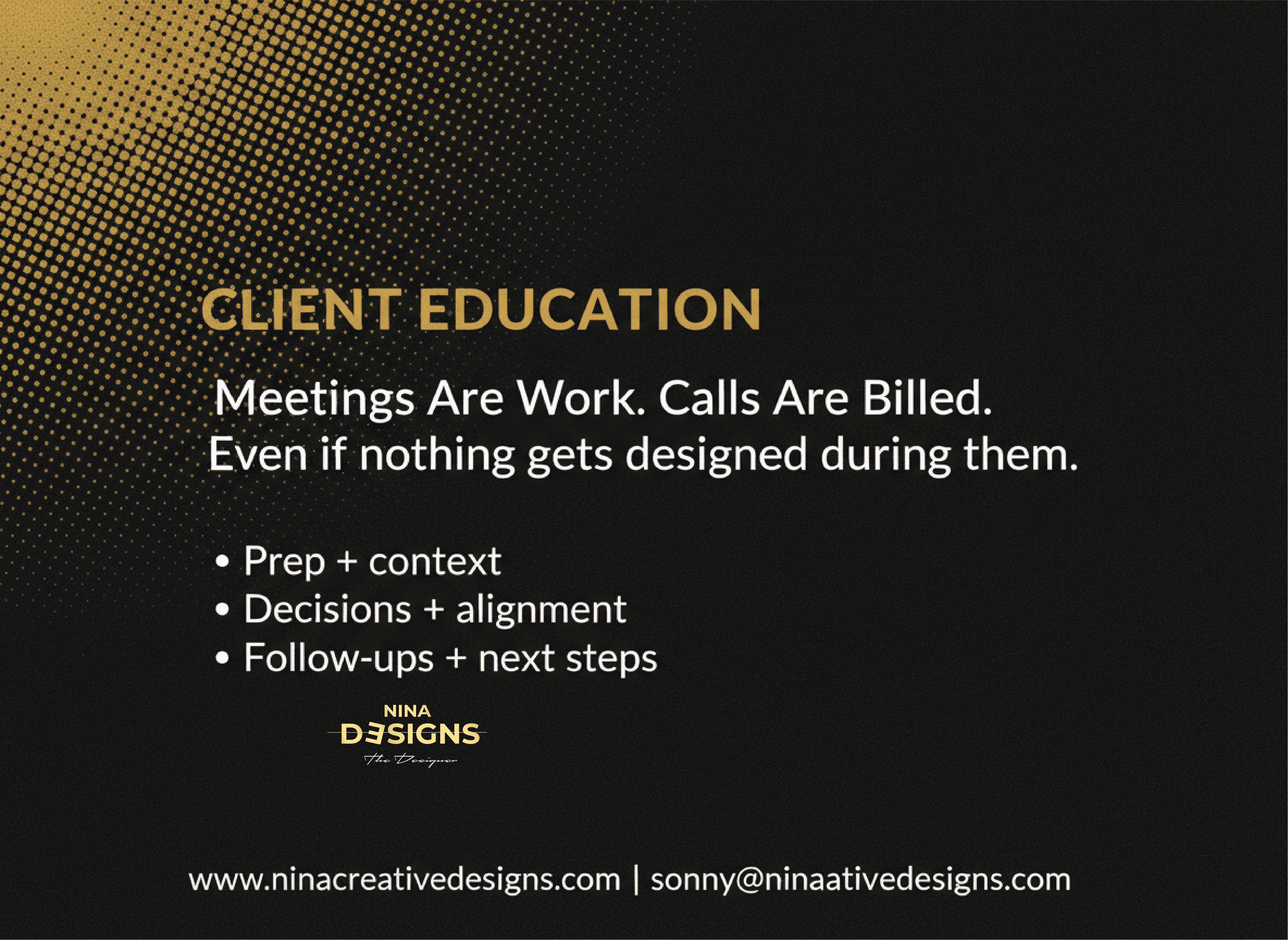
This piece is a client-education reminder that meetings are part of the work—and that’s why calls are billed even when you don’t see a design file produced during the call. It explains that “quick calls” still require prep + context, decisions + alignment, and follow-ups + next steps—and those hours directly impact timelines, capacity, and project outcomes. The goal is simple: clearer expectations, smoother projects, and better results for everyone.
Let’s clear something up that causes a lot of tension between businesses and creatives:
A phone call is not “free.”
Even if no pixels move during the call. Even if you don’t receive a file immediately after.
Because meetings are work.
“But we’re just talking…”
That’s exactly the point.
When you hire a designer, you’re not only paying for the final deliverable.
You’re paying for the thinking, planning, and decision-making that makes the deliverable actually work.
And a meeting is often where that work happens.
What you’re really paying for on a call
A productive call isn’t just “chatting.” It usually includes:
Discovery: understanding your goals, audience, offer, and constraints
Strategy: choosing the right direction (and avoiding expensive mistakes)
Decision-making: getting approvals so the project can move forward
Clarification: turning vague feedback into actionable next steps
Problem-solving: handling issues before they become delays
Documentation: notes, action items, and translating conversation into a plan
That’s real labor.
The hidden cost businesses don’t see
Most businesses don’t realize that meetings create extra work around them.
A 30-minute call often becomes:
10 minutes to prep and review context
30 minutes on the call
15–30 minutes of follow-up (notes, recap, updated scope, next steps)
That “quick call” can easily take an hour.
Now multiply that by multiple stakeholders, multiple calls, and scattered feedback.
That’s why calls are billed.
Calls also slow production time
Here’s the part that surprises people:
Calls don’t happen “in addition” to design work. They replace design time.
Designers don’t have unlimited hours in a day.
So when a project becomes call-heavy, one of two things happens:
The timeline gets longer, or
The cost goes up (because more time is being used)
Neither is a punishment.
It’s just the math of time.
“We need to talk” is often a planning problem
A lot of calls happen because:
The brief wasn’t clear
Assets weren’t ready
Too many people are giving feedback
Decisions are being made late
Expectations weren’t set upfront
That’s not a moral failure.
But it is a process issue.
And process issues cost money.
How to get support without constant calls
If you want a smooth experience and a fair budget, try this:
Kickoff call: align on goals, scope, timeline, and deliverables
Async updates: one thread for questions and feedback
Scheduled review call: only when you’re choosing a direction or approving a milestone
One decision-maker: consolidate feedback before it hits the designer
You’ll get faster turnaround, fewer revisions, and less confusion.
If you want premium access, budget for it
Some clients truly want high-touch support:
frequent calls
rapid responses
ongoing consulting
real-time collaboration
That’s totally valid.
But that level of access is a retainer-style relationship, not a discount project.
Premium access = premium pricing.
The bottom line
If you want better design outcomes, respect the full process.
Meetings are part of the work.
They create clarity. They create alignment. They create decisions.
And those decisions are what make the design effective.
Want a designer who’s clear, direct, and process-driven?